

Gender violence in sexual and (non) reproductive health care: between gynecological and obstetric violence
Keywords:
gynecological violence, human rights, inhumane and degrading treatment, hegemonic medical model, genderAbstract
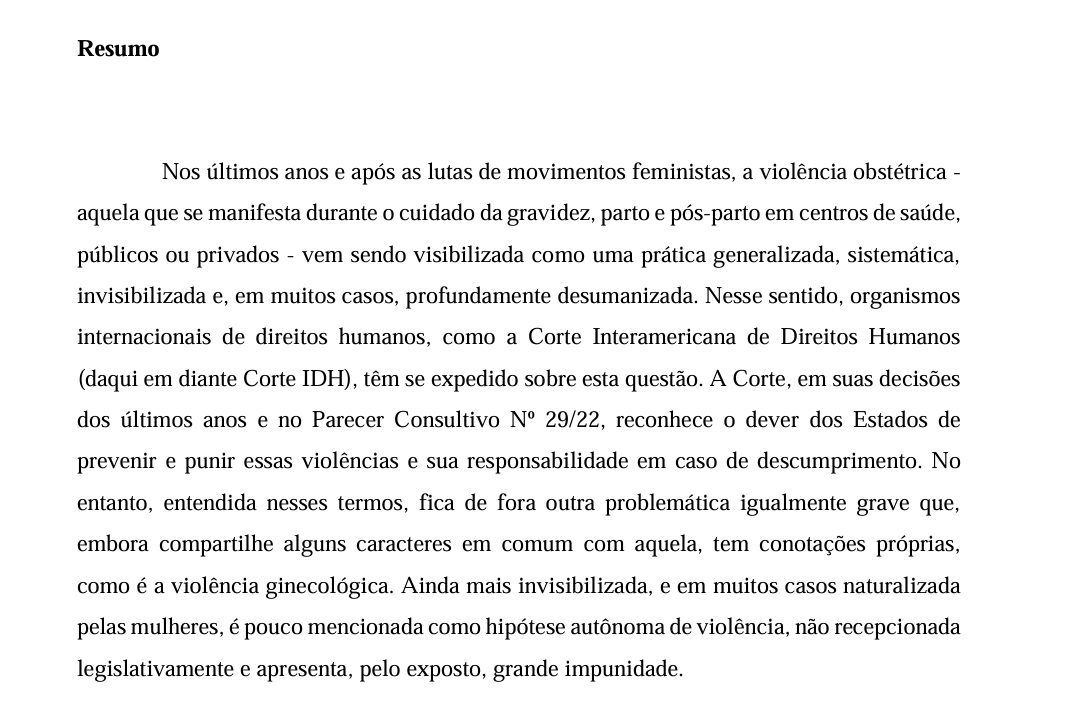
In recent years, and following the struggles of feminist movements, obstetric violence—those acts that occur during the care of pregnancy, childbirth, and postpartum in public or private health centers—has been becoming visible as a widespread, systematic,
invisible, and, in many cases, deeply dehumanized practice. In this regard, international human rights bodies, such as the Inter-American Court of Human Rights (hereinafter IACtHR), have issued on this matter. The Court, in its rulings in recent years and in Advisory Opinion No. 29/22, recognizes the duty of States to prevent and punish these forms of violence and their responsibility in case of noncompliance. However, understood in these terms, another equally serious problem remains outside, which, although it shares some characteristics in common with the former, has its own connotations, such as gynecological violence. Even more invisibilized, and in many cases normalized by women, it is rarely mentioned as an independent case of violence, not legislatively recognized, and as exposed, it enjoys considerable impunity. The objective of this article is to highlight a little-recognized form of violence to which women are subjected by health care providers in the treatment of our bodies and to propose reflection and awareness regarding this serious situation, which constitutes a true health problem. To this end, we will analyze some rulings that address this issue, although it has not always been characterized or defined as gynecological violence. Thus, it is necessary to analyze this phenomenon separate from obstetric violence to determine its true scope in relation to the need to inform, make visible, disseminate, and raise awareness regarding women's rights, in order to condemn and eradicate these practices so deeply rooted in health systems.
Downloads
Downloads
Published
Issue
Section
How to Cite
Most read articles by the same author(s)
- Ana Lis Palacio, María Alejandra Zucchini, OBSTETRIC VIOLENCE, A STRUCTURAL, SYSTEMATIC AND INVISIBLE SCOURGE , Revista Latinoamericana de Sociología Jurídica: No. 8 (5): Número 8 - Julio 2024